
In an increasingly competitive e-commerce landscape, speed, user experience, and search engine visibility are critical factors determining the success of an online store. Shopify Hydrogen, a headless development framework from Shopify, offers a powerful approach to building custom, high-performance stores. One of Hydrogen's standout features is its support for Server-Side Rendering (SSR), a technique that can profoundly impact a website's performance and, in particular, its Search Engine Optimization (SEO).
This article will delve into the intricate relationship between Server-Side Rendering and SEO within the context of Shopify Hydrogen. We'll explore what SSR is, why it's crucial for SEO, how Hydrogen implements it, and the strategies you can adopt to maximize its benefits, thereby improving search rankings and delivering a better customer experience.
I. What is Server-Side Rendering (SSR)?
To fully grasp SSR's impact on SEO, we first need to understand its fundamental concept.
In traditional web architecture, when you visit a webpage, the server sends back a fully rendered HTML file containing all the page's content and structure. The browser then simply displays this HTML file. This is precisely Server-Side Rendering.
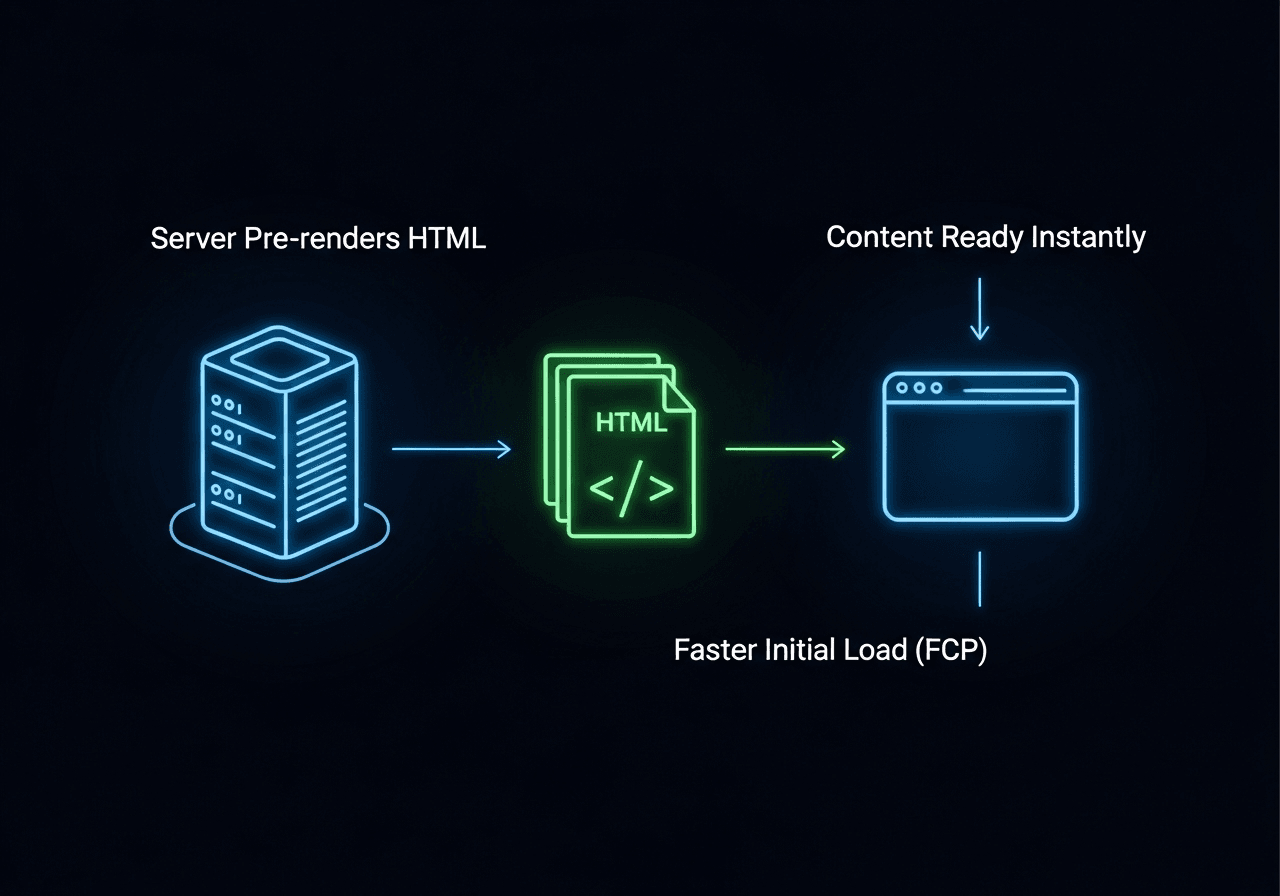
However, with the advent of Single-Page Applications (SPAs) and modern JavaScript frameworks like React (on which Hydrogen is built), a new model became popular: Client-Side Rendering (CSR). In CSR, the server sends back a very basic HTML file, primarily an empty SSR, in the context of modern JavaScript applications like Hydrogen, is a hybrid of these two approaches. When a user requests a page, the server executes the JavaScript code to render that page into HTML on the server and sends it to the browser. After the HTML is sent, the browser loads and executes the same JavaScript code to "hydrate" the page, transforming the static HTML into a fully dynamic and interactive application. This means that the initial page load receives a content-rich HTML page, while subsequent interactions can be handled quickly by JavaScript on the client. SSR's impact on SEO is one of the primary reasons developers and business owners are interested in it. Here are the core benefits: Search engine bots, like Googlebot, operate by "crawling" websites to read their content and "indexing" them, which means adding them to the search engine's database. With purely CSR websites, the main content is generated by JavaScript in the browser. While Googlebot has made significant advancements in executing JavaScript, it's not always perfect. It can take time for the bot to execute JavaScript, or in some rare cases, content might not be fully indexed if there are errors in the bot's JavaScript execution process. Conversely, with SSR, the server sends back HTML that is already fully populated with content. This means that when Googlebot visits your page, it immediately receives all the text content, images, links, and structure. This helps with: Page load speed is a critical ranking factor, especially since Google introduced Core Web Vitals. Metrics like First Contentful Paint (FCP) and Largest Contentful Paint (LCP) measure the time it takes for the first content and the largest content to appear on the screen, respectively. With SSR, the browser receives content-rich HTML immediately. This means users (and bots) can see the page content very quickly, leading to: In contrast, with CSR, the browser must load JavaScript, execute it, and only then render the content. This process can slow down FCP and LCP, especially on slower devices or networks. Faster page load times not only satisfy users but are also highly valued by Google, contributing to improved SEO rankings. While not a direct ranking factor, user experience is closely linked to SEO. Websites that provide a good experience often have lower bounce rates, longer time on page, and higher conversion rates. Google recognizes this, and its algorithms increasingly prioritize user-friendly websites. SSR contributes to improved UX in the following ways: Open Graph (for Facebook, LinkedIn, etc.) and Twitter Cards are special meta tags used to control how your content appears when shared on social media. They include the title, description, image, and URL. Social media crawlers typically do not execute complex JavaScript. If you rely on CSR to generate these meta tags, they might not be detected, leading to unattractive and unprofessional-looking social shares of your articles or products. With SSR, Open Graph and Twitter Cards are embedded directly into the HTML sent from the server. This ensures that when a URL is shared, social platforms can easily read and display the correct information, enhancing social visibility and engagement. Shopify Hydrogen is designed with SSR as one of its core pillars. It leverages React Server Components (RSC) and Suspense, combined with performance optimization tools to deliver a modern development experience and high performance. To fully leverage the benefits of SSR in Shopify Hydrogen for SEO, you need to implement specific strategies: 1. Optimize Title Tags and Meta Descriptions These are fundamental yet extremely important SEO elements. With Hydrogen, you can easily manage these tags in your codebase, often within specific layout or page components, using hooks or head management libraries like 2. SEO-Friendly URL Structure Create URLs that are concise, readable, contain keywords, and reflect the hierarchical structure of your website. Use keywords in URLs: For example, Remove unnecessary characters: Avoid special characters or lengthy parameters. Use hyphens (-) to separate words: For example, Hydrogen, with its flexible routing capabilities, allows you to set up your desired URL structure, which is highly beneficial for SEO. 3. Optimize Page Content While SSR helps bots read content more easily, the content itself must be high-quality. 4. Implement Structured Data (Schema Markup) Schema Markup helps search engines better understand the content on your page and can lead to the display of rich snippets in search results. Product: Use Organization: Use Breadcrumbs: Schema for breadcrumbs helps Google display clear navigation paths. With SSR in Hydrogen, you can easily embed JSON-LD (JavaScript Object Notation for Linked Data) directly into the HTML generated on the server. 5. Build Strong Internal Linking Internal links help search engines discover new pages, understand your site structure, and pass "link juice" between pages. 6. Create an XML Sitemap and Robots.txt 7. Monitor Performance with Google Search Console and Google Analytics 8. Optimize for Core Web Vitals While Hydrogen's SSR already does an excellent job here, you still need to ensure other resources are optimized: 9. Responsive Design Ensure your website displays and functions well on all devices, from desktops to mobile phones and tablets. Google uses mobile-first indexing, so a mobile-friendly website is a must. Shopify Hydrogen, with React and modern UI libraries, helps you easily build a responsive interface. V. Challenges and Considerations When Using SSR with Hydrogen While SSR offers many benefits, there are also some challenges and considerations: Server-Side Rendering in Shopify Hydrogen is not just a technical feature; it's a powerful strategic element that can transform the SEO performance of your e-commerce store. By ensuring your content is easily indexed, page load times are swift, and the user experience is smooth, you'll improve search engine visibility, attract more traffic, and ultimately increase sales. Harnessing the full potential of SSR in Hydrogen requires attention to detail, from optimizing titles and descriptions to implementing structured data and maintaining page performance. However, with the robust toolkit that Hydrogen provides, you can build a headless store that is not only beautiful and fast but also highly optimized for search engines. If you're looking to improve your search rankings and deliver a superior customer experience, investing in Shopify Hydrogen with Server-Side Rendering is a smart move. Read more:II. Why is Server-Side Rendering Important for SEO?
1. Better Indexing and Crawling Capabilities
2. Faster Page Load Times (FCP, LCP)
3. Improved User Experience (UX)
4. Easier for Open Graph and Twitter Cards
III. Server-Side Rendering in Shopify Hydrogen
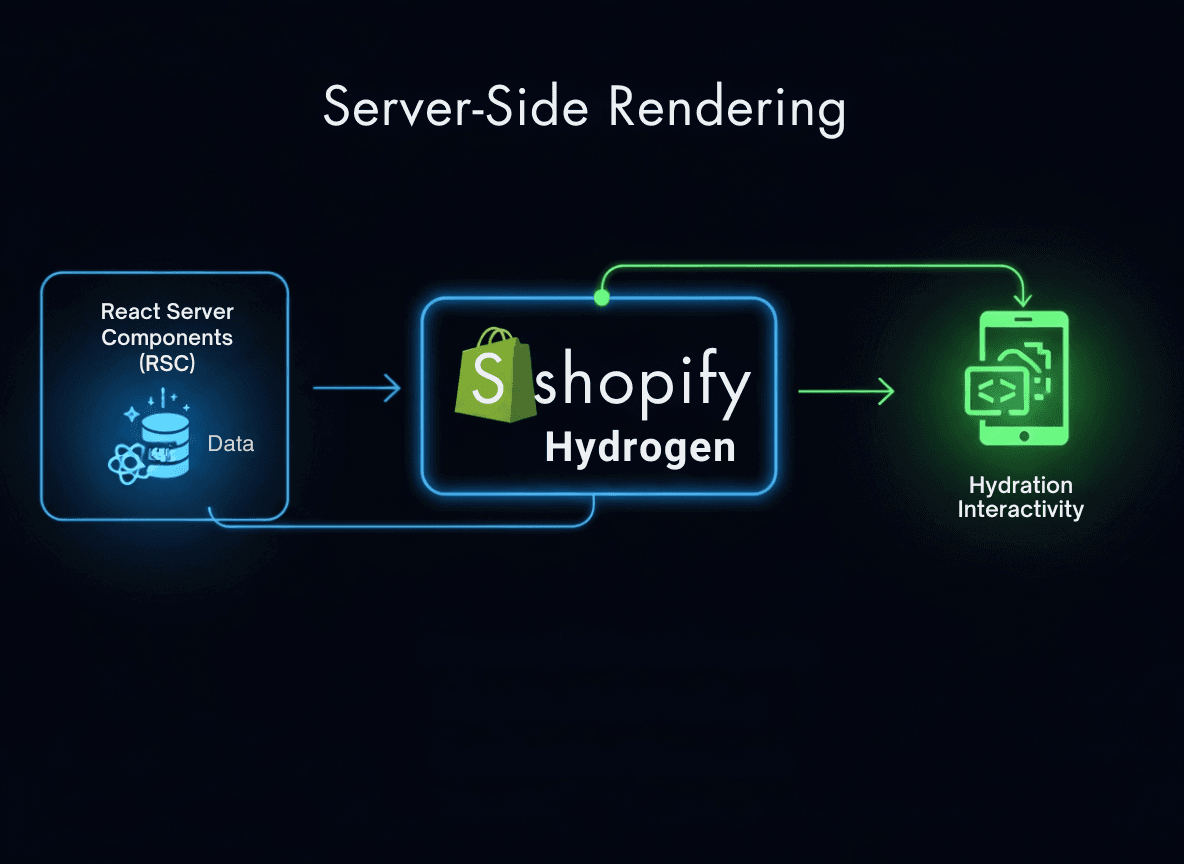
How Hydrogen Implements SSR:
Benefits of Hydrogen SSR for SEO:
IV. SEO Optimization Strategies with Shopify Hydrogen SSR
react-helmet-async.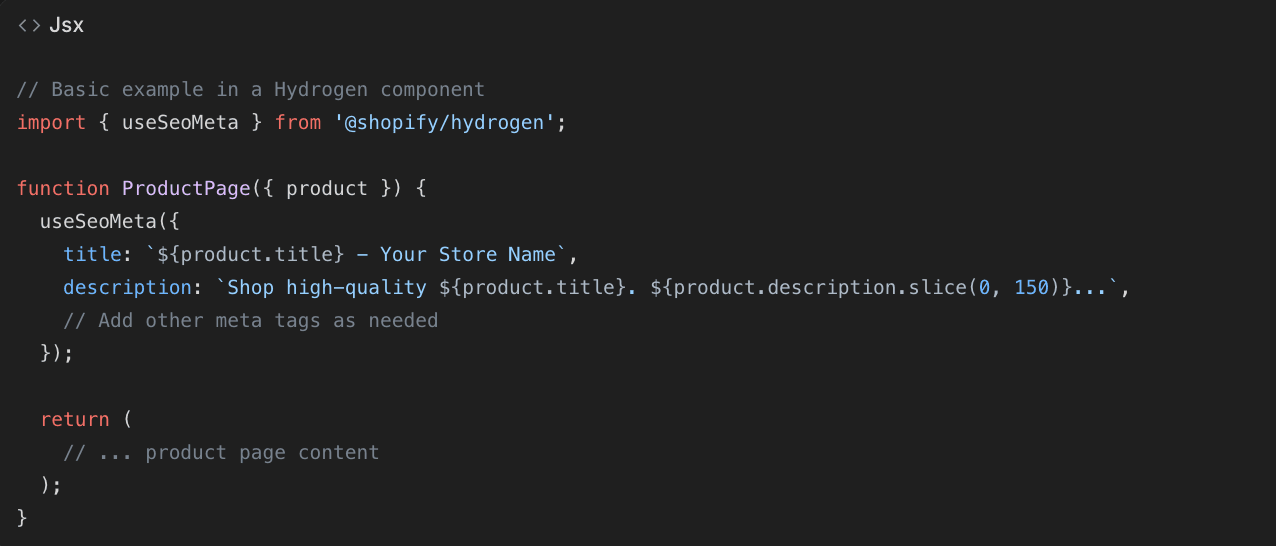
/collections/mens-t-shirts instead of /collections/category-123./new-products instead of /new_products.
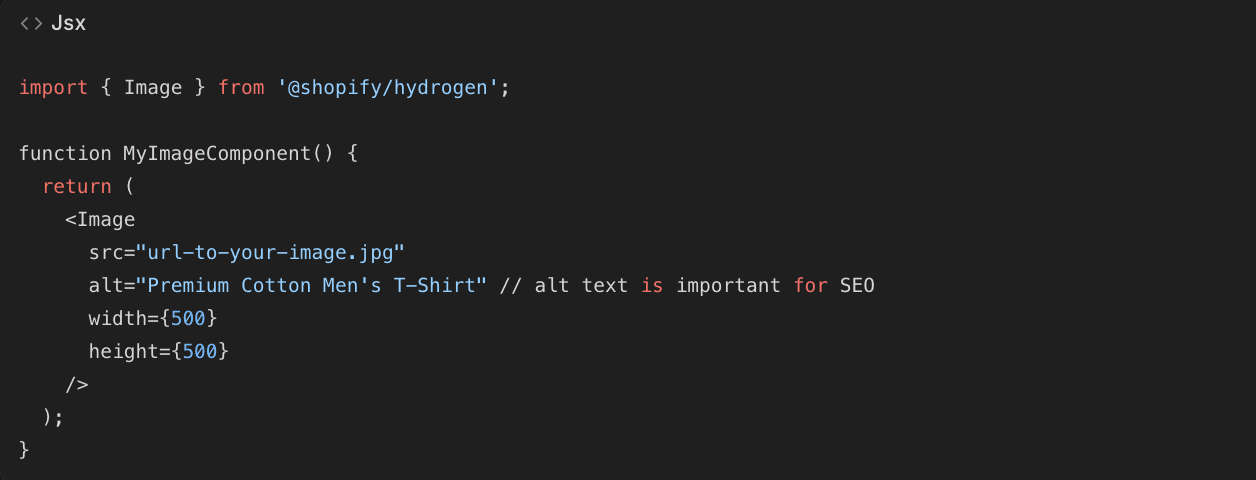
Product Schema to display prices, reviews, and availability directly in the SERP.Organization Schema for business information.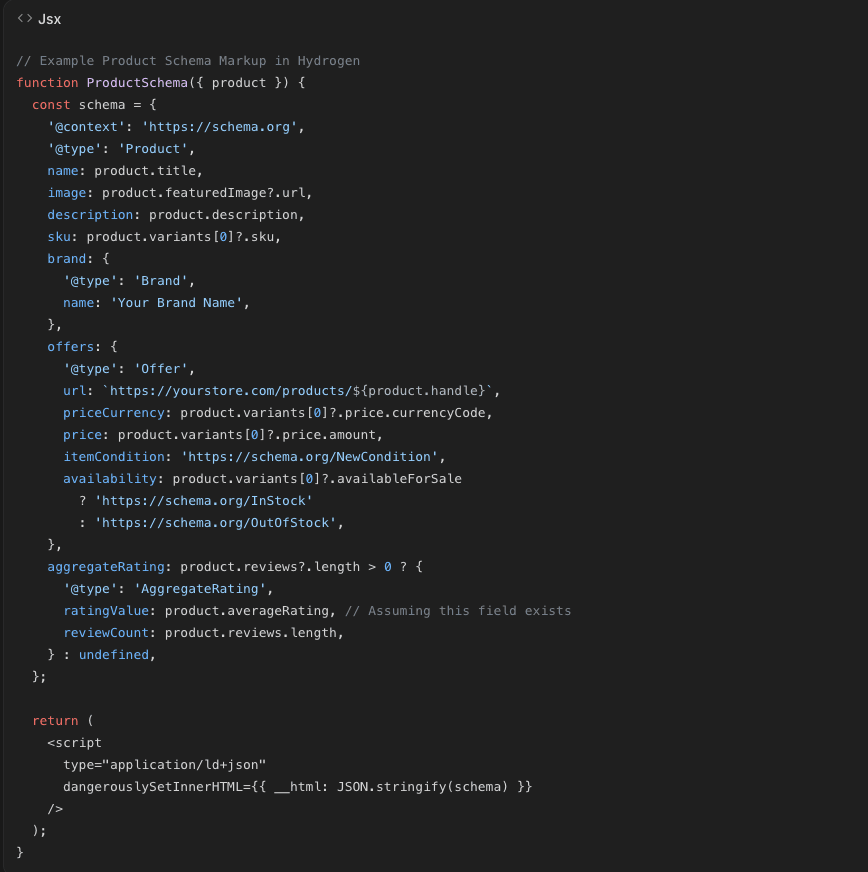

Conclusion: Elevate Your SEO with Shopify Hydrogen SSR