
Shopify Hydrogen has redefined how modern commerce storefronts are built by giving developers a high-performance, React-based framework optimized for headless commerce. While Hydrogen provides a powerful foundation, real-world ecommerce stores rarely operate in isolation. To build scalable, conversion-focused, and data-driven storefronts, businesses must rely on third-party services such as payment gateways, analytics platforms, marketing tools, search engines, and content management systems.
This is where shopify hydrogen integrations become a strategic advantage. By connecting Hydrogen storefronts with external services, merchants can unlock advanced capabilities without sacrificing speed, flexibility, or user experience.
This guide provides a comprehensive overview of how to integrate third-party services into Shopify Hydrogen, covering architecture, common integration categories, implementation approaches, best practices, performance considerations, and security implications.
I. Understanding Shopify Hydrogen Integration Architecture
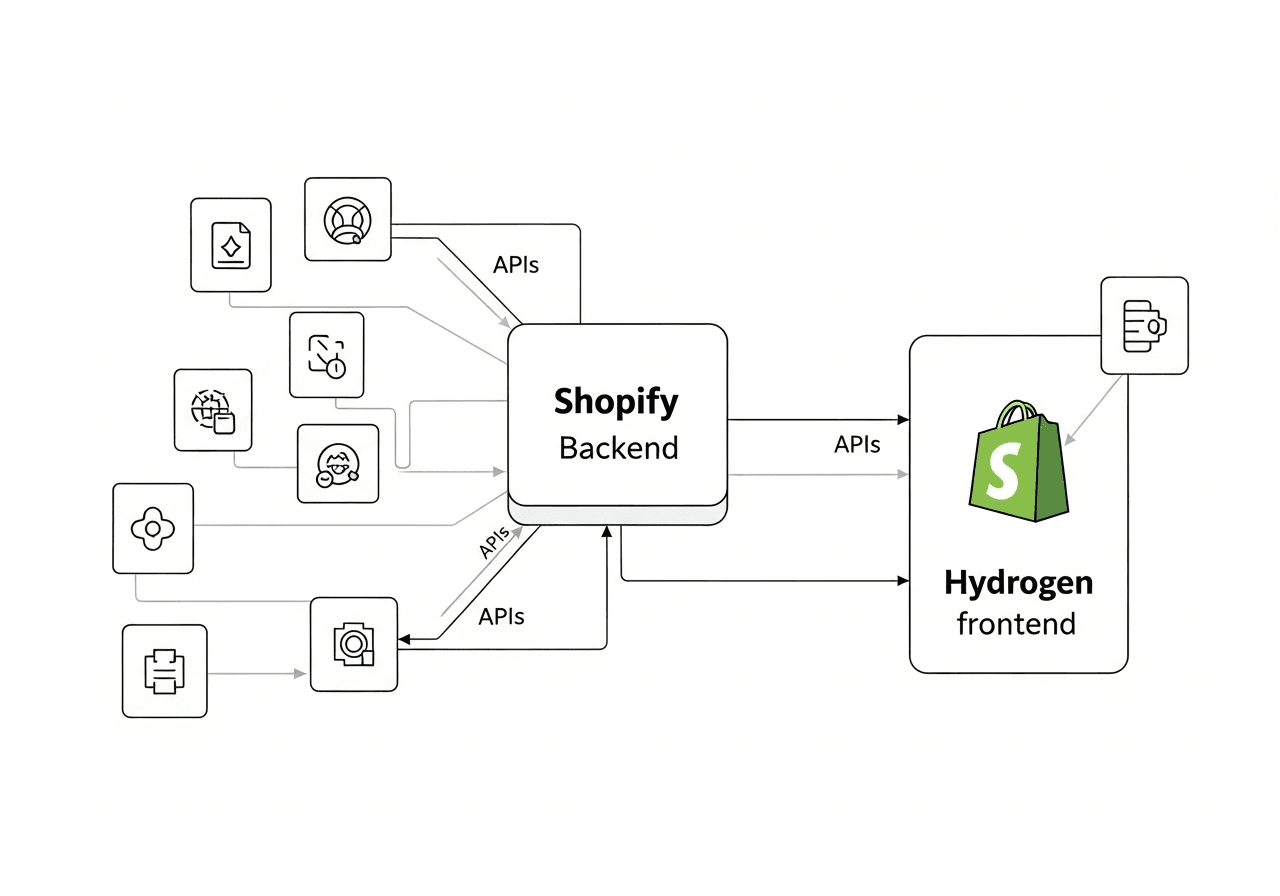
Before diving into specific integrations, it is essential to understand how Shopify Hydrogen is structured and how it communicates with external systems.
Headless by Design
Hydrogen is a headless framework that separates the frontend from the backend commerce logic. Shopify handles products, checkout, inventory, and orders, while Hydrogen controls rendering, routing, and UI.
This decoupled architecture makes integrations more flexible because:
- External services can be connected directly to the frontend
- APIs can be consumed without modifying Shopify core
- Developers can control when and how data is fetched
Key Integration Layers in Hydrogen
Third-party integrations in Shopify Hydrogen typically occur across four layers:
-
Frontend Layer JavaScript SDKs, tracking scripts, UI widgets, or embedded components.
-
Server Layer Server-side API calls using Oxygen runtime, enabling secure token handling.
-
Middleware Layer Custom API routes acting as intermediaries between Hydrogen and external services.
-
Shopify API Layer GraphQL Storefront API or Admin API used alongside external services.
Understanding these layers helps determine the optimal integration approach for performance and security.
II. Common Types of Shopify Hydrogen Integrations
1. Payment Gateway Integrations
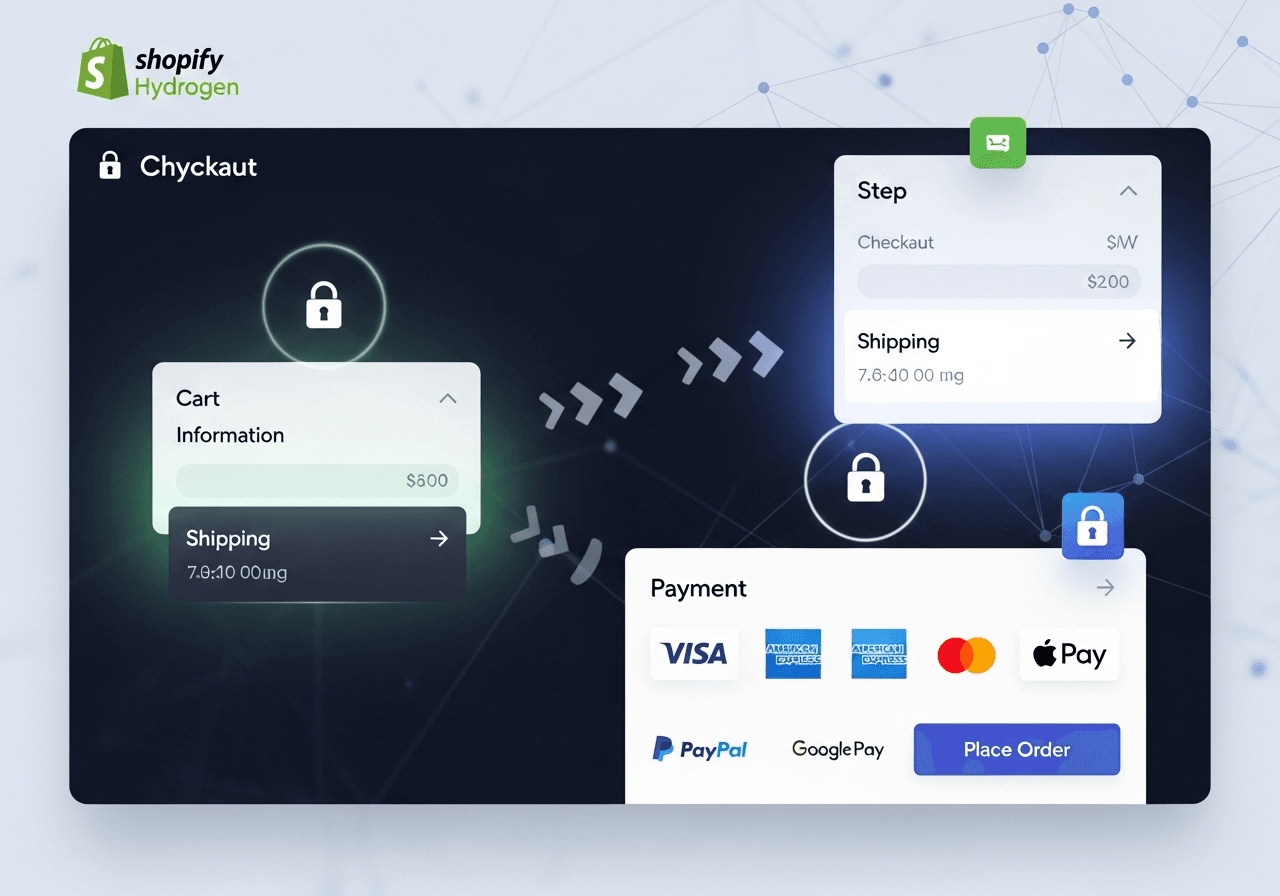
Payments are a critical part of ecommerce functionality. While Shopify Checkout handles most payment logic, Hydrogen storefronts often require additional integrations for enhanced flexibility.
Common use cases include:
- Alternative payment methods
- Buy now pay later providers
- Regional payment services
Examples:
- Stripe
- PayPal
- Klarna
- Adyen
In Hydrogen, payment integrations typically involve:
- Redirecting users to Shopify Checkout
- Passing metadata or customer context
- Tracking payment events via webhooks
2. Analytics and Tracking Integrations
Data-driven decisions depend on accurate analytics. Shopify Hydrogen allows developers to integrate advanced tracking solutions without bloated scripts.
Popular analytics tools include:
- Google Analytics
- Google Tag Manager
- Mixpanel
- Segment
- Amplitude
Hydrogen supports analytics integrations via:
- Server-side event tracking
- Client-side hooks
- Deferred loading for performance optimization
This ensures precise tracking while maintaining fast load times.
3. Marketing and CRM Integrations
Marketing automation and customer relationship management are essential for growth-focused brands.
Common integrations include:
- Klaviyo
- HubSpot
- Mailchimp
- Salesforce
- Customer.io
With shopify hydrogen integrations, marketers can:
- Sync customer data in real time
- Trigger events based on storefront interactions
- Personalize content dynamically
These integrations are often implemented using API calls triggered by user actions such as account creation, cart updates, or newsletter signups.
4. Search and Recommendation Engines
Advanced search and personalization significantly improve conversion rates.
Popular tools:
- Algolia
- Elasticsearch
- Bloomreach
- Constructor
Hydrogen integrates well with these services by:
- Indexing product data via Shopify APIs
- Querying search APIs on the frontend
- Rendering results with React components
This approach enables lightning-fast search experiences without relying on Shopify native limitations.
5. Content Management System Integrations
Many brands prefer a dedicated CMS for managing content outside Shopify.
Common CMS platforms:
- Contentful
- Sanity
- Strapi
- Prismic
CMS integrations allow teams to:
- Manage landing pages independently
- Create SEO-optimized blog content
- Control storytelling without developer involvement
Hydrogen fetches CMS data using REST or GraphQL APIs and renders it alongside Shopify product data.
III. Integration Methods in Shopify Hydrogen
IV. Performance Optimization for Third-Party Integrations

One of the biggest concerns with integrations is performance degradation. Hydrogen provides several tools to mitigate this risk.
Deferred Loading
Non-critical integrations should be loaded after initial page render. This includes:
- Analytics
- Chat widgets
- Marketing scripts
Deferred loading ensures faster time to first byte and improved Core Web Vitals.
Server Components and Streaming
Hydrogen supports React Server Components, enabling:
- Faster data fetching
- Reduced JavaScript payload
- Streaming responses
Third-party data can be fetched server-side and streamed to the client without blocking rendering.
Caching Strategies
Effective caching reduces repeated API calls.
Common caching approaches:
- Edge caching via Oxygen
- API response caching
- Stale while revalidate patterns
These strategies are critical when integrating rate-limited third-party APIs.
V. Security Best Practices for Shopify Hydrogen Integrations
Security must be a top priority when connecting external services.
Protecting API Keys
Never expose sensitive credentials on the client. Use:
- Environment variables
- Server-side API routes
- Token rotation policies
Hydrogen makes it easy to keep secrets secure within the server runtime.
Data Validation
Always validate external API responses to prevent:
- Injection attacks
- Malformed data rendering
- Unexpected runtime errors
This is especially important for CMS and marketing integrations.
Compliance Considerations
Integrations often involve customer data, requiring compliance with:
- GDPR
- CCPA
- PCI DSS
Ensure that consent management and data handling policies are enforced across all third-party services.
VI. Real-World Use Cases of Shopify Hydrogen Integrations
 Global DTC Brand
A global direct-to-consumer brand used Shopify Hydrogen with:
- Algolia for search
- Klaviyo for email automation
- Contentful for content management
Results included faster page loads, improved SEO rankings, and higher email-driven revenue.
High-Traffic Flash Sale Store
A flash-sale retailer integrated:
- Stripe for payments
- Segment for analytics
- Custom inventory sync service
Hydrogen streaming and server-side integrations ensured stability during peak traffic.
VII. Common Integration Challenges and How to Solve Them
API Rate Limits
Solution:
- Implement caching
- Use batch requests
- Schedule background syncs
Data Synchronization Issues
Solution:
- Use webhooks
- Establish retry mechanisms
- Log integration failures
Performance Bottlenecks Solution:
- Audit third-party scripts
- Remove unused integrations
- Prioritize server-side logic
Best Practices Checklist
To ensure successful shopify hydrogen integrations:
- Choose API-first services
- Prefer server-side integrations
- Monitor performance metrics
- Secure all credentials
- Document integration logic
- Test under real traffic conditions
VIII. Future of Third-Party Integrations in Shopify Hydrogen
As headless commerce continues to evolve, Shopify Hydrogen integrations will become more sophisticated. Trends to watch include:
- AI-powered personalization
- Real-time inventory sync
- Composable commerce architectures
- Unified customer data platforms
Businesses that invest early in robust integrations will gain a long-term competitive edge.
Conclusion
Integrating third-party services in Shopify Hydrogen is not just a technical task, but a strategic decision that directly impacts performance, scalability, and customer experience. By leveraging the flexibility of Hydrogen and adopting best practices for integration, merchants can build future-proof storefronts that grow with their business.
Whether you are connecting analytics tools, payment providers, CMS platforms, or marketing automation systems, well-executed shopify hydrogen integrations enable innovation without compromise.